Seating Dynamics and Their Role in Sustaining Mental Resilience During Lengthy One-on-One Casino Poker Matches
Vera Becker · Aug 26, 2026
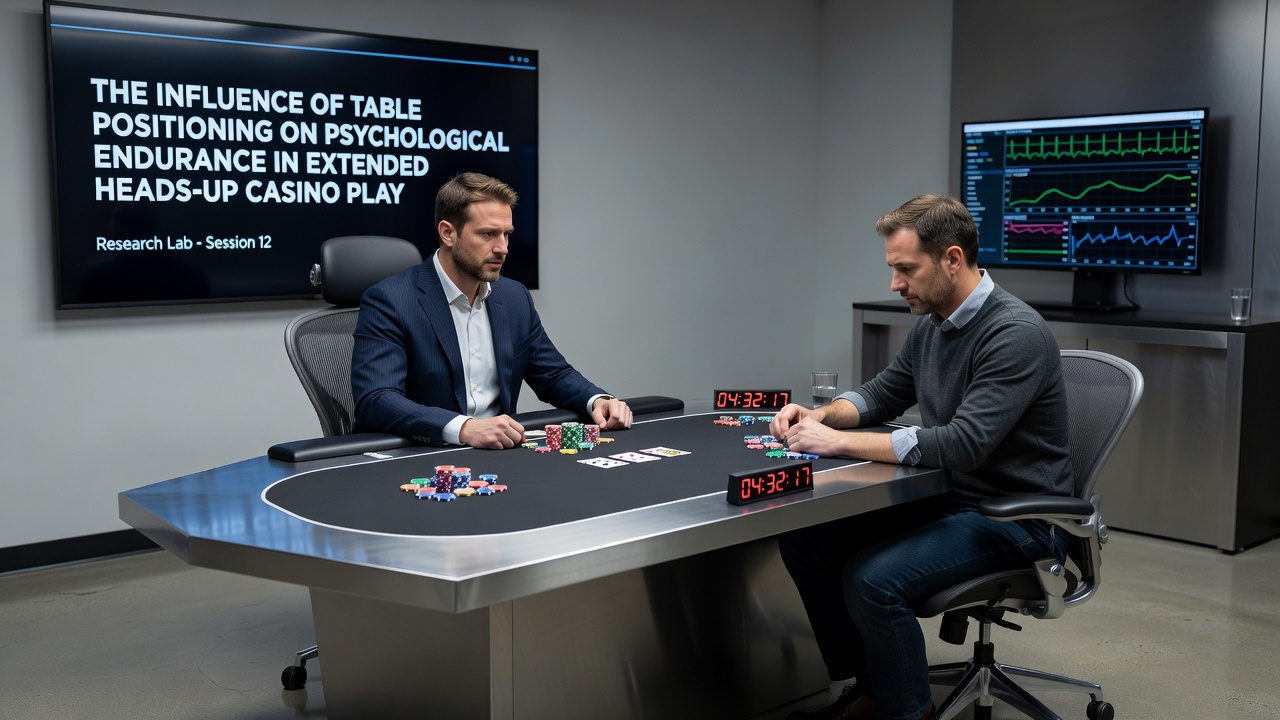
Seating Dynamics and Their Role in Sustaining Mental Resilience During Lengthy One-on-One Casino Poker Matches
Table positioning in heads-up casino poker shapes how players manage attention and stress across long sessions, with the dealer button alternating every hand and blinds rotating in a fixed pattern that creates distinct decision environments. Observers note that the player in the button position acts last after the flop, turn, and river, which allows more time to process information before committing chips, whereas the blind defender must respond first and often with incomplete data. Data from casino floor reports indicate that sessions extending beyond four hours show measurable shifts in player posture and eye movement patterns that correlate with position changes.
Core Mechanics of Position Rotation in Heads-Up Formats
Every hand begins with the small blind posting half the minimum bet and the big blind posting the full amount, after which the button receives cards and acts last post-flop. This cycle repeats without interruption, yet the psychological load differs because the button holder sees the opponent's action before deciding on continuation bets or checks. Researchers at the University of Nevada, Las Vegas have documented that heart-rate variability increases more sharply when players defend blinds repeatedly during night sessions that stretch past midnight. Casino records from properties operating under the Nevada Gaming Control Board show average heads-up match lengths of 3.2 hours during peak summer periods, with longer durations recorded when both participants hold deep stacks.
Mental Fatigue Patterns Linked to Repeated Blind Defense
Extended exposure to acting first after the flop places sustained demand on working memory, since the defender must anticipate a wider range of possible holdings while the button player retains the option to check back or apply pressure. Studies compiled by the Canadian Centre for Gaming Research reveal that error rates in hand reading rise after approximately ninety minutes when participants remain in the blind defender seat for consecutive orbits. Those who've tracked session data at major properties note that players who request seat changes to balance position exposure report steadier concentration levels, although such requests are subject to floor approval and table availability. And in August 2026, several WSOP Circuit stops at Commerce Casino introduced optional position-balancing breaks for heads-up side events lasting more than five hours.
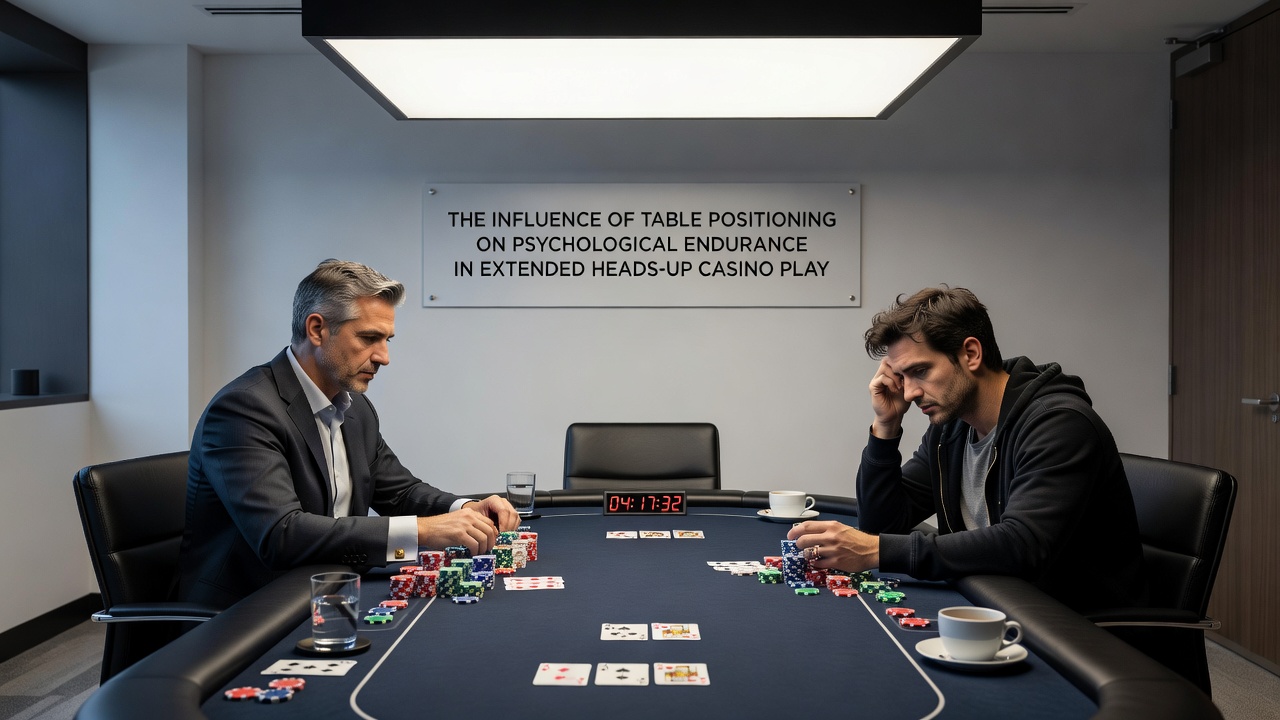
Physiological Markers Observed Across Position Shifts
Eye-tracking equipment used in controlled casino simulations demonstrates that blink rates drop when participants hold the button, suggesting heightened visual focus on board textures and opponent mannerisms. Conversely, blink rates climb during blind defense sequences, particularly when stacks fall below thirty big blinds and decisions carry higher relative risk. Figures released by the Australian Institute of Gambling Research indicate that cortisol samples collected from volunteers after six-hour heads-up blocks show elevated levels tied to the number of times each player defended the big blind under time pressure. The reality is that these markers appear consistently across multiple venues, independent of individual skill levels, which points to a structural element of the game rather than personal variation alone.
Strategic Adjustments That Address Position-Based Strain
Experienced participants often widen their opening ranges from the button while tightening defense frequencies from the blinds once session length exceeds three hours. This calibration reduces the volume of difficult first-to-act decisions without altering overall aggression metrics. One study revealed that players who tracked their own position-specific fold rates over multiple nights maintained steadier decision quality, whereas those who ignored the pattern experienced sharper declines in accuracy during the final two hours. Casino loyalty programs, documented by the New Jersey Division of Gaming Enforcement, sometimes award comps that encourage longer sessions, yet players who incorporate deliberate position-aware breaks show lower rates of voluntary session termination due to reported mental exhaustion.
Environmental Factors That Compound Position Effects
Lighting, ambient noise, and dealer speed interact with positioning demands, because faster dealing cycles shorten teh recovery window between tough blind-defense spots. Data collected at Harrah’s Cherokee during 2025 events showed that tables with higher dealer rotation speeds correlated with earlier onset of visible fatigue signs when matches remained heads-up past the four-hour mark. Those monitoring player behavior note that individuals who reposition their chairs slightly to maintain line-of-sight advantages on the button experience fewer instances of neck strain, a minor physical factor that nevertheless contributes to cumulative cognitive load over extended periods.
Conclusion
Position rotation in heads-up casino play creates measurable differences in decision timing and information access that accumulate across long sessions. Evidence from regulatory reports, university studies, and industry tracking consistently links repeated blind defense to elevated physiological stress markers and increased error rates after several hours. Players who monitor these patterns and make corresponding range adjustments demonstrate more stable performance metrics, while environmental and procedural elements at individual properties further influence how positioning affects mental endurance. As schedules expand in 2026, continued collection of session data will clarify the extent of these interactions across varied casino settings.