Profiling Rivals in Casino One-on-One Poker and Impacts on Enduring Holdings
Jonas Keller · May 27, 2026

Profiling Rivals in Casino One-on-One Poker and Impacts on Enduring Holdings
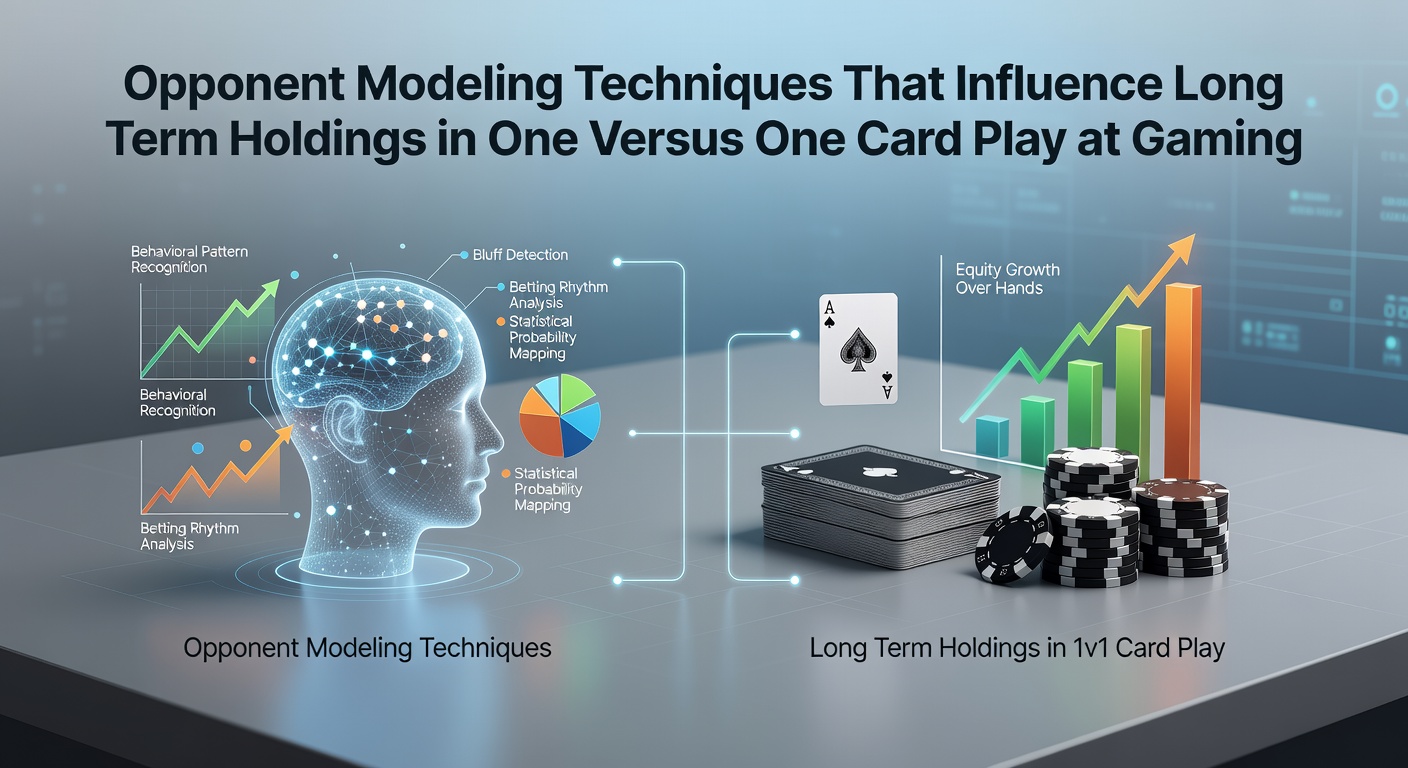
Opponent modeling in one-versus-one card play at gaming establishments involves systematic observation of betting patterns, timing decisions, and physical behaviors that players exhibit during extended sessions, and these methods allow participants to refine their own ranges while anticipating adjustments from the other side of the table.
Researchers in behavioral game theory have documented how consistent tracking of an adversary's actions over multiple hands leads to more precise range construction, and this precision directly correlates with improved decision accuracy during later streets where pot sizes grow substantially.
Core Components of Effective Modeling
Players begin by categorizing opponents into broad archetypes based on initial observations such as preflop raise frequencies and continuation bet tendencies, then refine those categories through ongoing data collection that includes fold rates to specific bet sizes and responses to aggression on different board textures; this iterative process turns raw observations into actionable profiles that evolve throughout a session or across repeated encounters at the same venue.
Timing tells receive particular attention in live settings because the interval between receiving cards and making a decision often reveals hand strength or uncertainty, and studies of professional play indicate that experienced participants integrate these temporal cues with betting history to narrow possible holdings more effectively than those relying solely on mathematical ranges.
Integration with Long-Term Asset Strategies
Long-term holdings in casino environments depend on maintaining positive expected value across thousands of hands rather than isolated session results, and opponent modeling contributes to this stability by reducing the frequency of marginal spots where information asymmetry favors the better-prepared participant; when profiles accurately predict folding ranges or calling tendencies, players can size bets to maximize value extraction while minimizing exposure during unfavorable matchups.
Data from regulatory filings shows that venues in Nevada track aggregate player performance metrics that indirectly reflect the benefits of such adaptive strategies, and participants who maintain detailed records of past opponents demonstrate measurable improvements in hourly rates over multi-month periods compared with those who approach each encounter without historical context.
Technological and Observational Tools in 2026
As of May 2026 many establishments have introduced optional digital note-taking applications that comply with house rules while allowing players to log observations without violating device policies, and these tools help organize data on specific opponents encountered during regular visits; the result is faster recall during rematches, which accelerates the refinement of counter-strategies.
Academic work from institutions such as the University of Nevada, Las Vegas continues to examine how memory aids and pattern recognition software influence decision quality in heads-up formats, with findings indicating that structured modeling reduces variance in outcomes when sample sizes reach several hundred hands against recurring adversaries.
Regional Regulatory Perspectives
Canadian provincial oversight bodies including the Alcohol and Gaming Commission of Ontario publish guidelines on fair play practices that encompass information gathering during table games, and these frameworks encourage transparent modeling techniques that rely on in-game observation rather than external data sources; similar approaches appear in reports from the Malta Gaming Authority, which oversees numerous international poker operations and emphasizes player education on strategic record-keeping.
Industry associations such as the European Gaming and Betting Association have referenced studies showing that informed participants maintain steadier bankroll trajectories when they apply systematic profiling, because the method mitigates losses from predictable opponents while capitalizing on exploitable patterns that emerge over repeated interactions.
Conclusion
Opponent modeling techniques continue to shape how participants approach sustained play in one-versus-one casino card games, and the integration of observational data with range analysis supports more consistent capital preservation across extended periods; regulatory and academic sources confirm that structured approaches yield measurable advantages when applied consistently, underscoring the practical value of maintaining accurate profiles rather than relying on intuition alone.