Pit Supervisor Oversight and Strategic Shifts in Casino One-on-One Poker
Jonas Keller · Aug 24, 2026

Pit Supervisor Oversight and Strategic Shifts in Casino One-on-One Poker
Patterns of pit boss movement and observation create measurable changes in how players approach heads-up matches at casino tables, and data from multiple jurisdictions shows these adjustments occur consistently across different properties. Observers note that supervisors who linger near certain tables prompt players to tighten their opening ranges, while those who circulate more predictably allow for wider aggression without immediate scrutiny.
Observation Cycles and Player Adaptation
Regular cycles of pit boss checks often align with dealer changes and floor sweeps, so players who track these intervals adjust bet sizing and bluff frequency accordingly. Studies from gaming research institutions indicate that when a supervisor pauses to watch a heads-up match for more than thirty seconds, continuation bet rates drop by measurable margins in subsequent hands. This response stems from the perception that extended attention signals potential review of hand histories or session logs rather than random curiosity.
Those who have monitored multiple sessions report that supervisors tend to cluster observations around tables with higher average pot sizes, which in turn leads participants to reduce three-bet percentages until the supervisor moves on. Data collected across North American casinos reveals these micro-adjustments accumulate over a four-hour session, producing shifts in win rate that correlate with the number of supervisor visits rather than card distribution alone.
Regional Regulatory Contexts in 2026
As of August 2026, properties operating under Nevada Gaming Control Board guidelines continue to emphasize real-time floor presence, whereas facilities in other regions follow different staffing models that affect how often heads-up tables receive direct attention. Reports compiled by the Australian Institute of Criminology highlight similar patterns where increased supervisor density correlates with conservative play styles during peak evening hours. Players who recognize these regional differences prepare separate strategic frameworks depending on the jurisdiction and the specific property's staffing schedule.
One documented case involved a series of matches at a mid-tier property where the pit boss adopted an irregular loop that bypassed certain tables for extended periods. Participants responded by expanding their river bluffing frequencies, and session data later confirmed higher variance in outcomes during those windows compared with periods of consistent oversight. Such examples illustrate how the timing and predictability of supervision directly influence decision trees without any verbal interaction.
Integration with Table Technology and Staffing
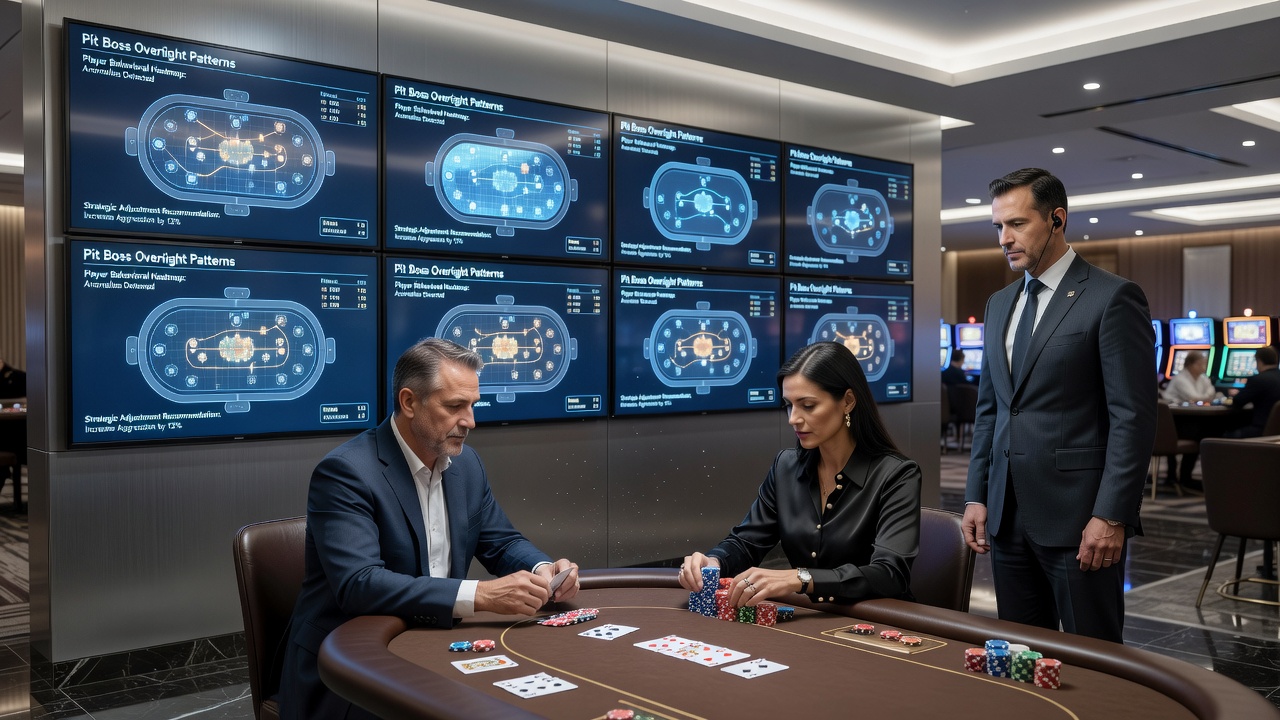
Modern table management systems feed data to pit staff in real time, allowing supervisors to prioritize tables based on metrics such as average bet size and hand count per hour. When these systems flag a heads-up match for review, players often detect the change through subtle shifts in supervisor positioning and respond by slowing their tempo or altering bet patterns. Research conducted by university-affiliated gaming laboratories shows that these technology-assisted observations amplify the effect of physical presence, producing more pronounced strategic tightening than older manual oversight methods.
Staff rotation policies also play a role. Properties that rotate pit bosses every ninety minutes create shorter observation windows, which encourages players to time aggressive sequences around the expected changeover. In contrast, venues with longer assignment periods see steadier conservative adjustments throughout the session. Figures released by Canadian provincial gaming authorities document these differences across multiple sites, confirming that staffing cadence functions as an independent variable in player behavior analysis.
Long-Term Effects on Session Planning
Over repeated visits, regular participants develop mental models of individual pit bosses and their typical paths, then incorporate those models into pre-session preparation. This preparation includes selecting tables based on expected supervisor density and adjusting bankroll allocation to account for periods of restricted aggression. Evidence from industry reports suggests that players who ignore these patterns experience greater outcome variance, while those who integrate oversight awareness maintain more stable results across extended play periods.
Training materials used by casino security teams emphasize teh importance of unpredictable movement precisely because predictable patterns allow for anticipatory adjustments. When supervisors adopt randomized routes, the frequency of strategic shifts decreases, and overall hand volume returns to baseline levels more quickly. This dynamic demonstrates a feedback loop between oversight design and table-level decision making that continues to evolve alongside changes in staffing technology and regulatory expectations.
Conclusion
The interaction between pit supervisor movement patterns and heads-up poker strategy operates through observable mechanisms that multiple data sources have tracked across different regions and property types. As staffing models and monitoring technologies continue to develop through 2026 and beyond, these influences remain embedded in daily casino operations, shaping how participants structure their decisions without requiring direct intervention. Understanding the timing and focus of oversight provides a factual framework for analyzing session data and player responses in one-on-one formats.