Calibrating Risks Through Progressive Blinds: Venue-Based Heads-Up Poker and Resource Management Patterns
Jordan Hartmann · Jun 17, 2026
Calibrating Risks Through Progressive Blinds: Venue-Based Heads-Up Poker and Resource Management Patterns
Venue-based heads-up poker presents distinct challenges as blind levels advance in structured increments, forcing participants to recalibrate risk thresholds with each successive increase while managing finite resources across extended sessions. Observers note that these adjustments often follow identifiable patterns tied to stack depths, opponent tendencies, and the accelerating cost of remaining active in each hand.
Blind Advancement Mechanics in Physical Poker Rooms
Physical casino environments typically implement blind increases on fixed timers ranging from twenty to thirty minutes, creating predictable pressure points that differ from online formats where timing remains more flexible. Data from regional gaming reports shows players encounter an average of four to six blind doublings during a standard two-hour heads-up match, with each step narrowing effective stack sizes relative to the big blind. Those who study live tournament flows indicate that early levels allow wider speculative ranges because implied odds remain favorable, yet later stages demand tighter selection as pot sizes grow faster than stack preservation strategies can accommodate.
Observed Patterns in Risk Threshold Adjustments
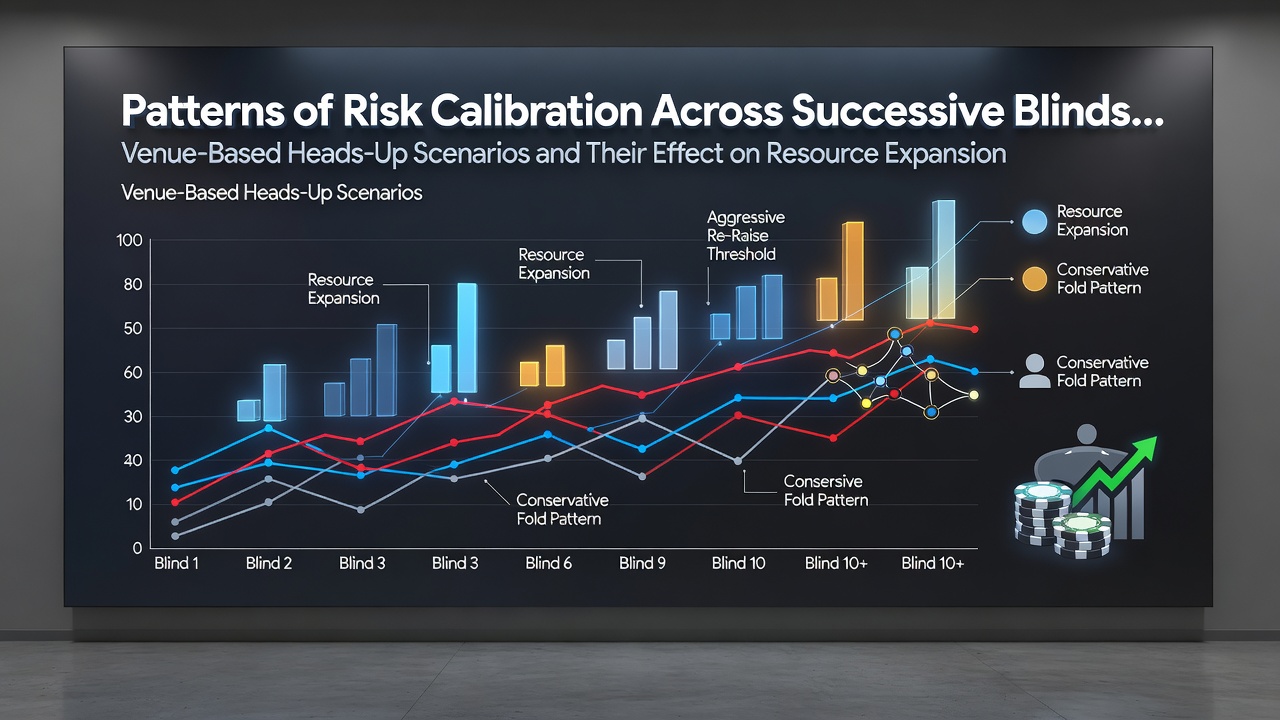
Researchers tracking decision points across multiple venues have documented consistent shifts where participants reduce continuation betting frequencies by approximately twelve to eighteen percent once blinds reach the fourth level or higher. This recalibration coincides with heightened fold equity calculations, as the cost of post-flop mistakes escalates proportionally with blind size. Take one documented series from a mid-tier California card room where tracked sessions revealed that players holding between thirty and fifty big blinds adjusted their three-bet ranges downward while increasing check-raise frequencies to offset the growing ante-like pressure from blinds alone.
What's interesting emerges when examining how these adjustments interact with stack-to-blind ratios. Sessions starting at fifty big blinds or more demonstrate steadier resource retention because early aggression can build cushions before blinds accelerate, whereas shorter stacks force earlier all-in confrontations that either multiply holdings quickly or deplete them within fewer than three levels. Industry analyses from Canadian provincial gaming authorities confirm similar distributions across regulated poker rooms, highlighting that resource expansion correlates more strongly with timing of risk escalation than with raw aggression metrics.
Impact on Long-Term Resource Trajectories
Resource expansion in this context refers to net chip accumulation translated into monetary terms across repeated matches rather than single-session outcomes. Patterns indicate that players maintaining consistent calibration across blind jumps achieve steadier growth curves because they avoid the variance spikes associated with mistimed bluffs or hero calls during higher levels. According to figures compiled by the Nevada Gaming Control Board on live poker activity, heads-up participants who adapt ranges level-by-level report lower standard deviation in session results compared with those applying static strategies throughout.
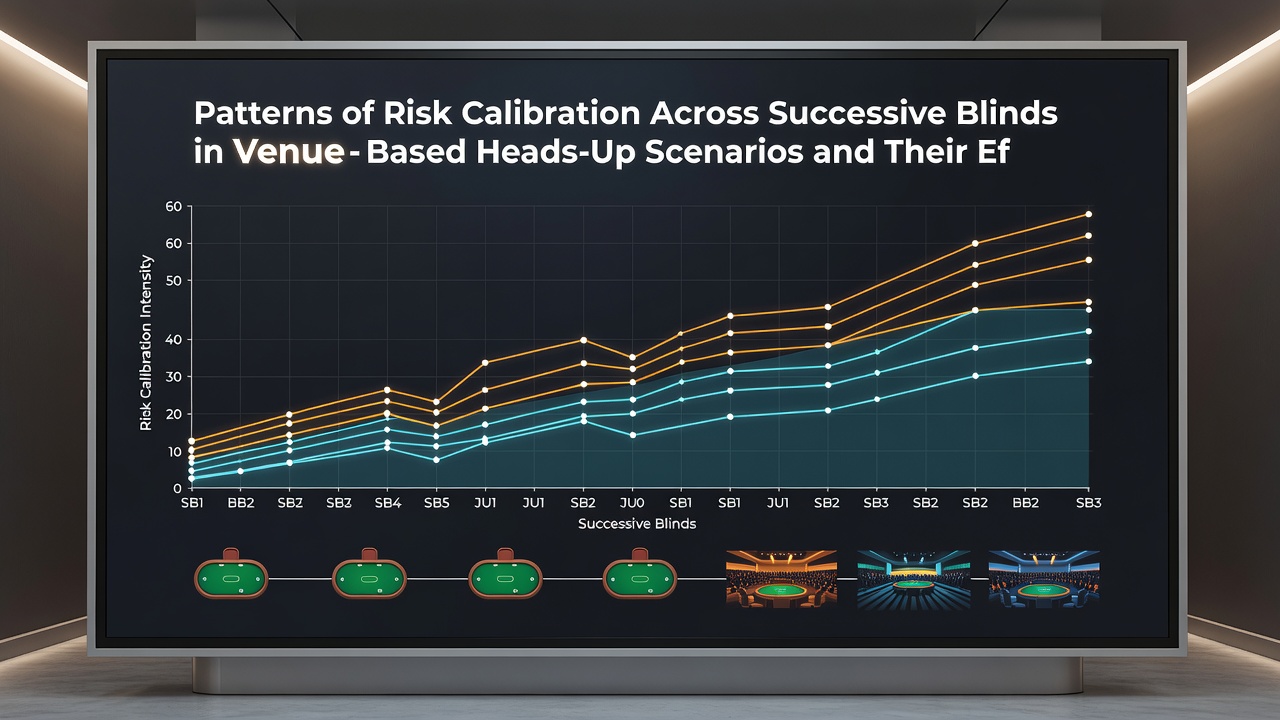
Yet the relationship between calibration accuracy and expansion remains nonlinear. A mid-session blind increase can reward those who tightened ranges preemptively by preserving chips for value-heavy spots, while punishing delayed adjustments through forced commitments at unfavorable pot odds. European gaming research from Malta's regulatory framework notes parallel effects in live cash game environments where heads-up tables operate under time-based blind structures, underscoring that sustained participation depends on recognizing when marginal hands transition from profitable to neutral across successive levels.
Strategic Adaptations Documented in Venue Settings
Practical responses observed across multiple sites include tightening opening ranges by roughly twenty-five percent between the second and fifth blind levels while simultaneously expanding river bluffing frequencies to balance the more selective preflop approach. These dual adjustments help maintain fold equity without overcommitting resources during periods when blinds consume a larger percentage of average stacks. One study of regular participants at major U.S. poker destinations revealed that those incorporating real-time stack-to-blind monitoring into their process experienced fewer sharp drawdowns during accelerated blind phases.
Additional layers appear when factoring in opponent profiling speed, since venue-based matches allow physical tells and timing reads unavailable online. Players who integrate these cues tend to recalibrate aggression thresholds earlier in each blind level, converting informational advantages into chip accumulation before the next increase resets relative values. Government-collected statistics from Australian state gaming commissions align with these observations, showing measurable differences in session duration and average profit margins between adaptive and non-adaptive cohorts.
Conclusion
Patterns of risk calibration across successive blinds in venue-based heads-up scenarios reveal measurable connections to resource expansion outcomes, with adaptation timing and range adjustments serving as primary variables. Data from multiple regulatory and academic sources continues to map these relationships, providing frameworks that participants can reference when structuring session approaches in physical poker settings. As blind structures evolve within casino environments through June 2026 and beyond, ongoing observation of these dynamics offers continued insight into sustainable play patterns.