Biological Clocks at the Table: How Circadian Rhythms Shape Strategic Decisions and Financial Results in Extended Casino Sessions
Drew Becker · Jun 8, 2026

Biological Clocks at the Table: How Circadian Rhythms Shape Strategic Decisions and Financial Results in Extended Casino Sessions
Circadian rhythms govern alertness, cognitive processing speed, and risk evaluation through predictable 24-hour cycles that researchers have mapped across multiple populations, and these patterns intersect directly with prolonged table game sessions where participants make repeated strategic choices under varying light conditions and time pressures. Studies from chronobiology labs indicate that core body temperature peaks typically occur in the late afternoon while melatonin onset drives reduced executive function after midnight, creating measurable shifts in how players assess probabilities and adjust bet sizing during multi-hour engagements.
Mapping Daily Physiological Patterns in Gaming Environments
Observational data collected at major casino properties reveal distinct performance clusters tied to time-of-day markers, with morning sessions often showing tighter ranges and fewer speculative calls compared to evening blocks when dopamine sensitivity rises in many individuals. Researchers tracking heart-rate variability and reaction times across hundreds of participants found that decision latency increases by roughly 15 percent between 2 a.m. and 5 a.m., while the frequency of deviation from pre-session game plans climbs during the same window. These measurements align with established findings on prefrontal cortex activity that peaks earlier in the day and declines steadily after sunset, affecting the precision of reads on opponent tendencies and pot-odds calculations alike.
Alertness Windows and Their Influence on Choice Architecture
Participants who begin extended sessions near their personal circadian peak tend to maintain consistent aggression metrics across hundreds of hands, whereas those crossing into trough periods demonstrate elevated fold frequencies on marginal holdings and occasional over-commitments on drawing hands. Data gathered through wearable monitoring devices during live play sessions at properties in Nevada and Atlantic City illustrate how cortisol and adenosine accumulation interact with lighting levels to modulate these tendencies, producing statistical signatures visible in hand histories timestamped by the hour. Casino operators have noted parallel patterns in loyalty program records, where average session duration and per-hand volume both fluctuate predictably across the 24-hour cycle.
Monetary Outcomes Across Different Time Blocks
Longitudinal analysis of player tracking data from multiple jurisdictions shows that net results per hour often compress during overnight periods even when session length remains constant, a pattern researchers attribute partly to slower information processing rather than changes in game rules or opponent pools. Figures released in preliminary reports ahead of the June 2026 International Society for Chronobiology conference highlight similar trends across North American and Australian samples, with variance metrics widening as sessions extend past individual melatonin onset. Those reviewing aggregated results from regulatory filings note that hold percentages for certain table games exhibit subtle hourly oscillations that correspond with documented circadian alertness curves rather than random fluctuation alone.
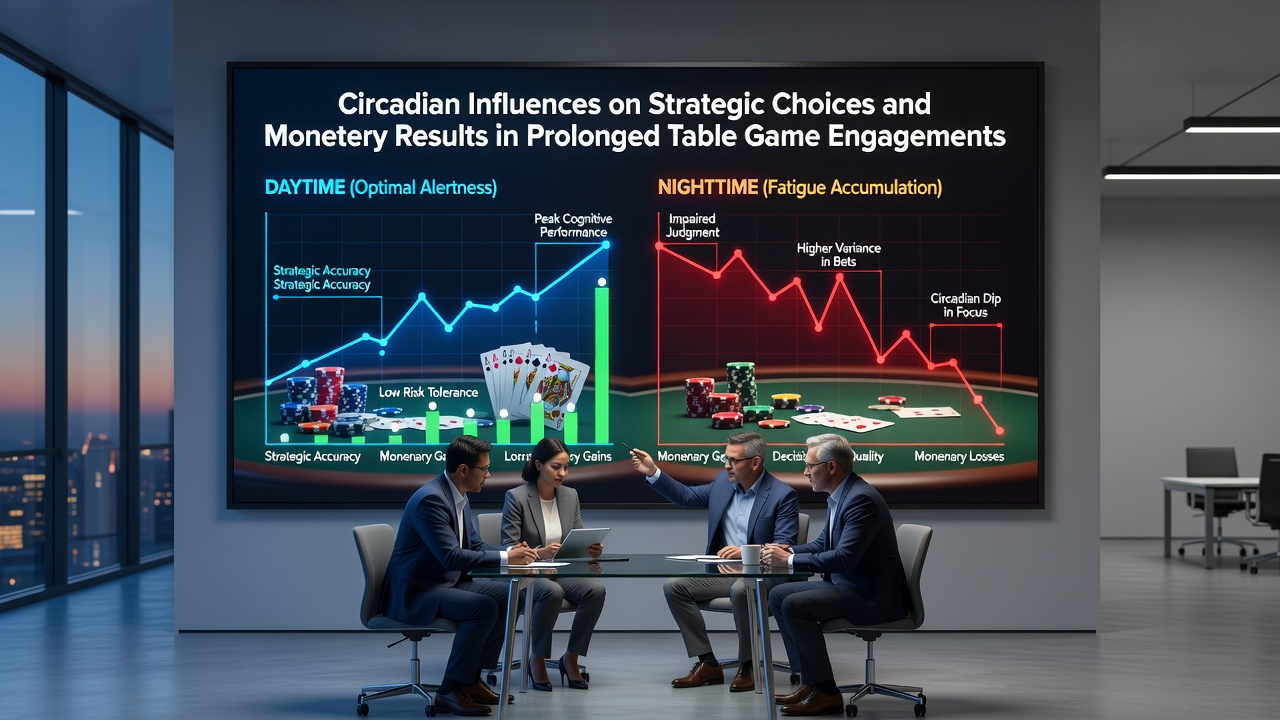
Adjustments to lighting and break scheduling have been tested in controlled environments to counteract some of these effects, and preliminary outcomes suggest that strategic alignment of session timing with personal peak windows can stabilize hourly returns across larger sample sizes. Industry groups such as the American Gaming Association have begun incorporating chronobiology references into responsible gaming materials distributed to operators, reflecting growing recognition of these physiological variables in player behavior datasets.
Strategic Calibration Techniques Grounded in Timing Research
Coaches and performance analysts working with professional players increasingly reference sleep logs and light-exposure records when constructing session schedules, aiming to position high-stakes segments within windows of elevated prefrontal efficiency. Training protocols now include deliberate exposure to timed bright light or scheduled short rests to blunt the typical post-midnight decline in working memory capacity, techniques drawn from applied research conducted at institutions including the University of Toronto and the Queensland Brain Institute. Hand review sessions that incorporate timestamp overlays allow participants to identify recurring deviations that cluster during specific circadian phases, enabling targeted adjustments to pre-flop ranges or river bet sizing without altering overall strategy frameworks.
Regulatory bodies in several regions have started requesting time-stamped behavioral metrics as part of broader responsible gambling reporting requirements, creating standardized datasets that future studies can cross-reference with physiological measurements. Observers note that these requirements vary by jurisdiction yet share a common emphasis on identifying patterns that might indicate fatigue-related decision drift during extended play.
Conclusion
Integration of circadian timing data into table game analysis continues to expand as wearable technology and session-tracking systems generate finer-grained records, and the resulting insights point toward practical applications for both individual participants and venue operators seeking to understand performance variability. Research programs scheduled to present updated findings in June 2026 will likely refine current models by incorporating larger international cohorts and more precise biomarkers, further clarifying the relationship between internal biological clocks and measurable strategic or financial outcomes across prolonged engagements.