Acoustic Influences on Concentration and Decision-Making in Prolonged Casino Heads-Up Poker Encounters
Vera Becker · Aug 19, 2026

Acoustic Influences on Concentration and Decision-Making in Prolonged Casino Heads-Up Poker Encounters
Sound levels in casino environments range from 70 to 85 decibels during peak hours, according to measurements reported by gaming facility operators across North America. These acoustic conditions interact with player attention during extended one-on-one poker matches, where sessions often stretch beyond four hours. Researchers have documented shifts in cognitive processing when background noise includes slot machine chimes, dealer announcements, and crowd murmurs, all of which create layered soundscapes that persist across multiple visits.
Sound Patterns and Attention Dynamics
Continuous exposure to fluctuating audio stimuli alters how participants maintain focus on opponent betting patterns and hand ranges. Studies conducted at university psychology laboratories show that variable noise frequencies can narrow attentional breadth, leading players to fixate on immediate actions rather than broader session trends. In heads-up settings, where information exchange occurs directly between two individuals, this narrowing effect becomes pronounced because each decision carries immediate consequences without the buffer of multiple opponents.
Observers note that certain acoustic peaks, such as jackpot celebrations or tournament announcements, coincide with momentary lapses in tracking opponent tendencies. Data collected from casino surveillance logs in Nevada facilities during 2025 and into August 2026 indicate that error rates in bet sizing increase by measurable margins in the minutes following such interruptions. Players who return to the same tables over successive evenings encounter repeated exposure to these patterns, which gradually shapes how they allocate mental resources across longer timeframes.
Resource Allocation Across Repeated Visits
Bankroll decisions made during multi-session engagements reflect cumulative effects of acoustic environments on fatigue and risk assessment. Evidence from industry reports compiled by the Canadian Gaming Association reveals correlations between prolonged exposure to high-ambient sound and conservative adjustments in bet sizing during later stages of a visit. Participants appear to conserve chips more readily when acoustic fatigue accumulates, particularly in matches that extend into early morning hours when casino sound profiles shift toward lower but more persistent tones from ventilation systems and distant gaming activity.
One documented pattern involves players shortening session lengths on subsequent visits after experiencing extended exposure on prior nights. This adjustment stems from observed declines in decision accuracy rather than any explicit strategic overhaul. Figures released by the Nevada Resort Association in mid-2026 highlight that repeat visitors who frequent acoustically intense sections of the floor tend to reduce average session duration by 15 to 20 percent compared with those seated in quieter perimeter areas.
Environmental Variables in One-on-One Settings
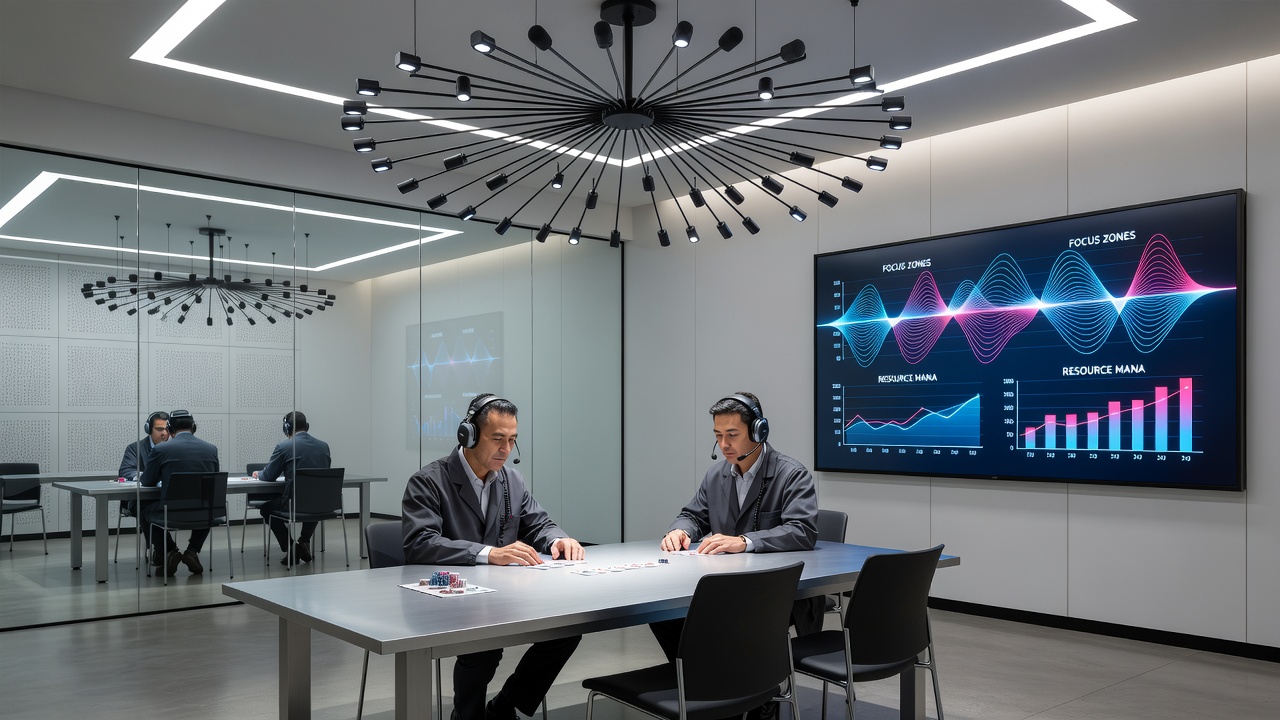
Heads-up encounters amplify the role of acoustics because auditory cues from surrounding activity compete directly with verbal and nonverbal signals exchanged at the table. Acoustic mapping projects undertaken by researchers at the University of Nevada, Las Vegas, demonstrate that sound reflections off table surfaces and nearby structures create localized zones of higher intensity that affect specific seat positions more than others. Players occupying those positions over repeated sessions show measurable differences in how they manage stack sizes when facing consistent opponents.
Regulatory documentation from the Australian Communications and Media Authority on environmental noise in entertainment venues supports the observation that irregular sound bursts disrupt working memory functions critical for tracking opponent history. In poker contexts, this translates to altered tendencies in calling frequencies and fold rates during the later portions of long matches. Facilities that have implemented targeted sound-dampening panels around high-stakes areas report different player retention patterns compared with unmodified sections, though these modifications remain limited to select properties as of August 2026.
Longitudinal Observations from Casino Records
Longitudinal data sets maintained by major casino groups illustrate how acoustic conditions influence resource management strategies over weeks and months. Players who consistently occupy tables near high-traffic walkways demonstrate steadier chip preservation across sessions than those positioned near clustered gaming machines. These patterns emerge without deliberate player awareness of the environmental factor, suggesting that acoustic shaping operates below conscious strategy formulation.
Analysis of loyalty program records from properties in Atlantic City shows that individuals logging repeated heads-up play reduce average buy-in amounts during periods when casino sound levels remain elevated due to promotional events. Such adjustments occur alongside stable win rates, indicating that resource allocation changes reflect modified focus endurance rather than shifts in skill application. Similar trends appear in reports from European gaming operators, where acoustic environment data has been cross-referenced with session length statistics.
Conclusion
Casino acoustics interact with cognitive processes that govern attention during extended one-on-one poker matches and shape how participants distribute resources across repeated visits. Measurements from multiple jurisdictions confirm that sound intensity and variability correlate with alterations in decision timing and stack management. As facilities continue to refine their environments, these interactions remain a measurable component of player behavior in sustained heads-up play.